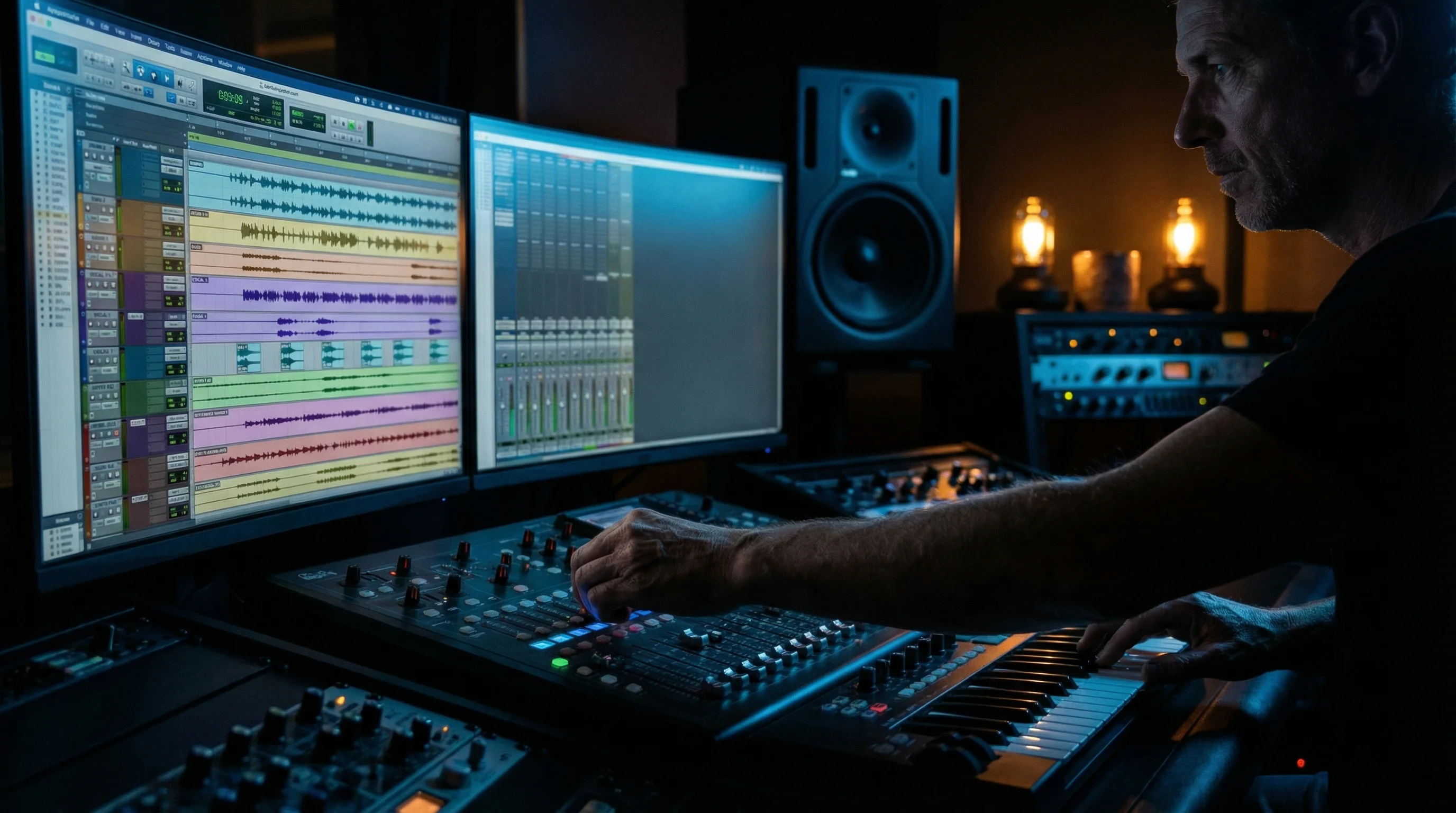
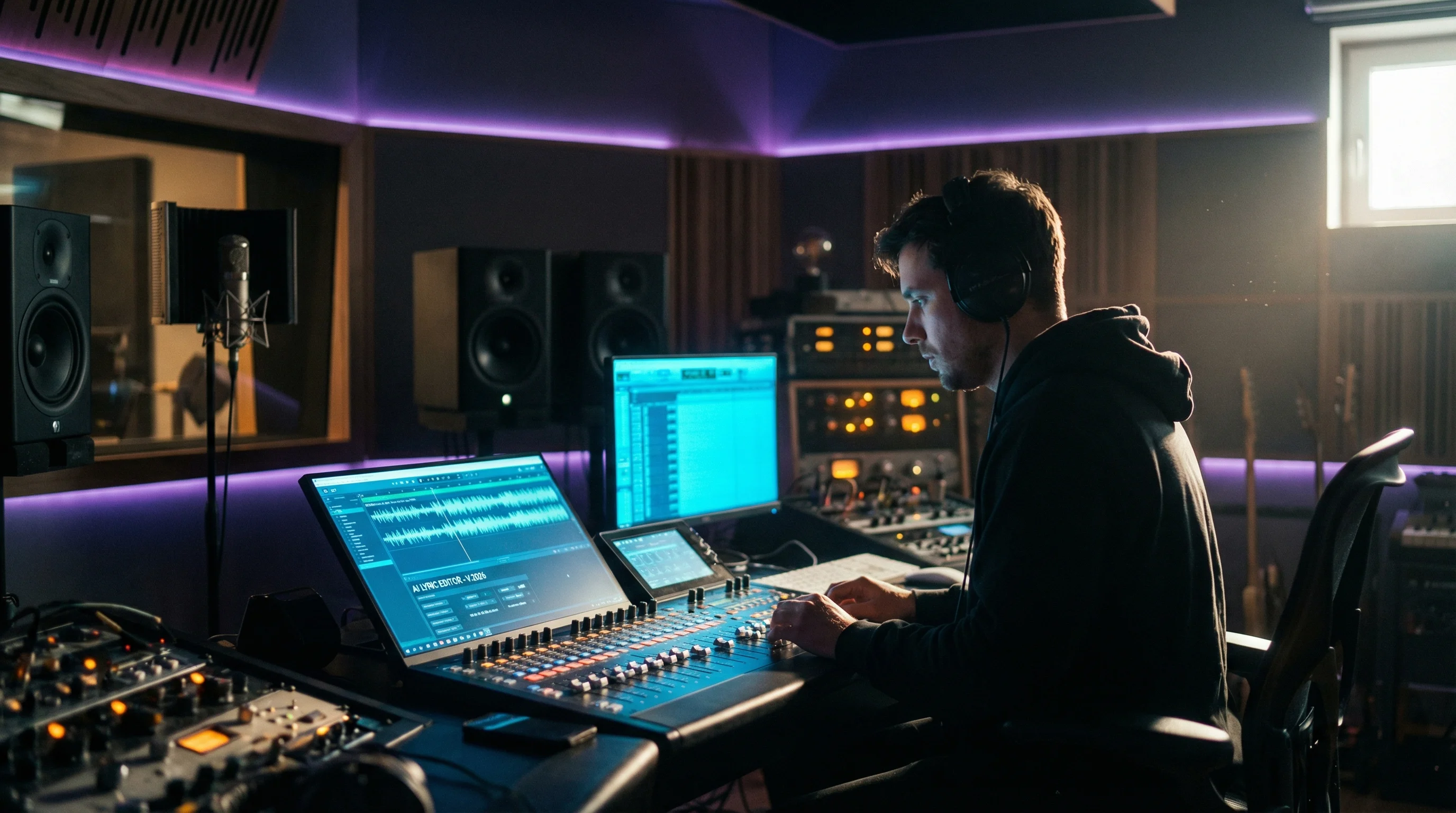
Hero image provided by Authority Blogger
I've completed over 400 professional lyric swaps in the past two years, and the landscape of AI lyric swap tools has transformed dramatically. After processing thousands of requests at Music Made Pro, I can tell you there's no magic one-click solution yet. But there are proven workflows that deliver professional results when you know which AI lyric swap tools to use and how to chain them together.
When clients need only a few words changed per section, I rely heavily on ChangeLyric because it excels at targeted modifications without content restrictions. This approach works best when you're changing one word in a sentence or making radio edits.
I start by using DiffChecker to analyze how many words actually need modification. If it's under 20% of the total lyrics, the minimal change workflow is your best bet.
The process begins with proper vocal isolation using Ultimate Vocal Remover. I specifically use the Viper X 1143 model for separating vocals from instrumentals. While not as refined as LALAL.AI for lead and backing vocal separation, ChangeLyric's vocal isolation features handle basic separation effectively.
In ChangeLyric, you work section by section. Input the original section timing, paste your new lyrics, and the AI attempts to match the original singer's voice while incorporating your changes. The key advantage here is zero content moderation - you can modify any lyrics without restrictions.
Experience has taught me that success depends on understanding when these AI lyric swap tools will work versus when they'll struggle. ChangeLyric performs best with:
The tool maintains the original mixing quality better than pure voice cloning methods, which often sound disconnected from the instrumental's reverb and compression characteristics.
When clients want every word changed, traditional AI lyric swap tools fall short. I've discovered that Suno's cover feature outperforms historical RVC workflows for full song transformations.
This workflow requires a pilot vocal recording. Either you sing the new lyrics yourself or hire a session vocalist. The pilot doesn't need to sound like the target artist - Suno handles the voice conversion.
I always use Suno's advanced options with specific settings that dramatically improve output quality:
Upload only the isolated vocal, not the full instrumental mix. Set the persona to match your target artist using vocal samples from the original song.
The main limitation? Content moderation. Suno's filters are aggressive, often blocking legitimate creative projects. This drives many professionals to seek unmoderated alternatives for unrestricted creativity.
Traditional voice cloning through Weights or Applio remains valuable for specific use cases, though ChangeLyric's voice changer offers a more streamlined approach. When Suno's moderation blocks your project, RVC offers complete creative control.
The RVC process involves training a voice model on clean samples of your target artist, then converting your pilot vocal through the trained model. While more time-intensive than modern AI lyric swap tools, it provides unfiltered results.
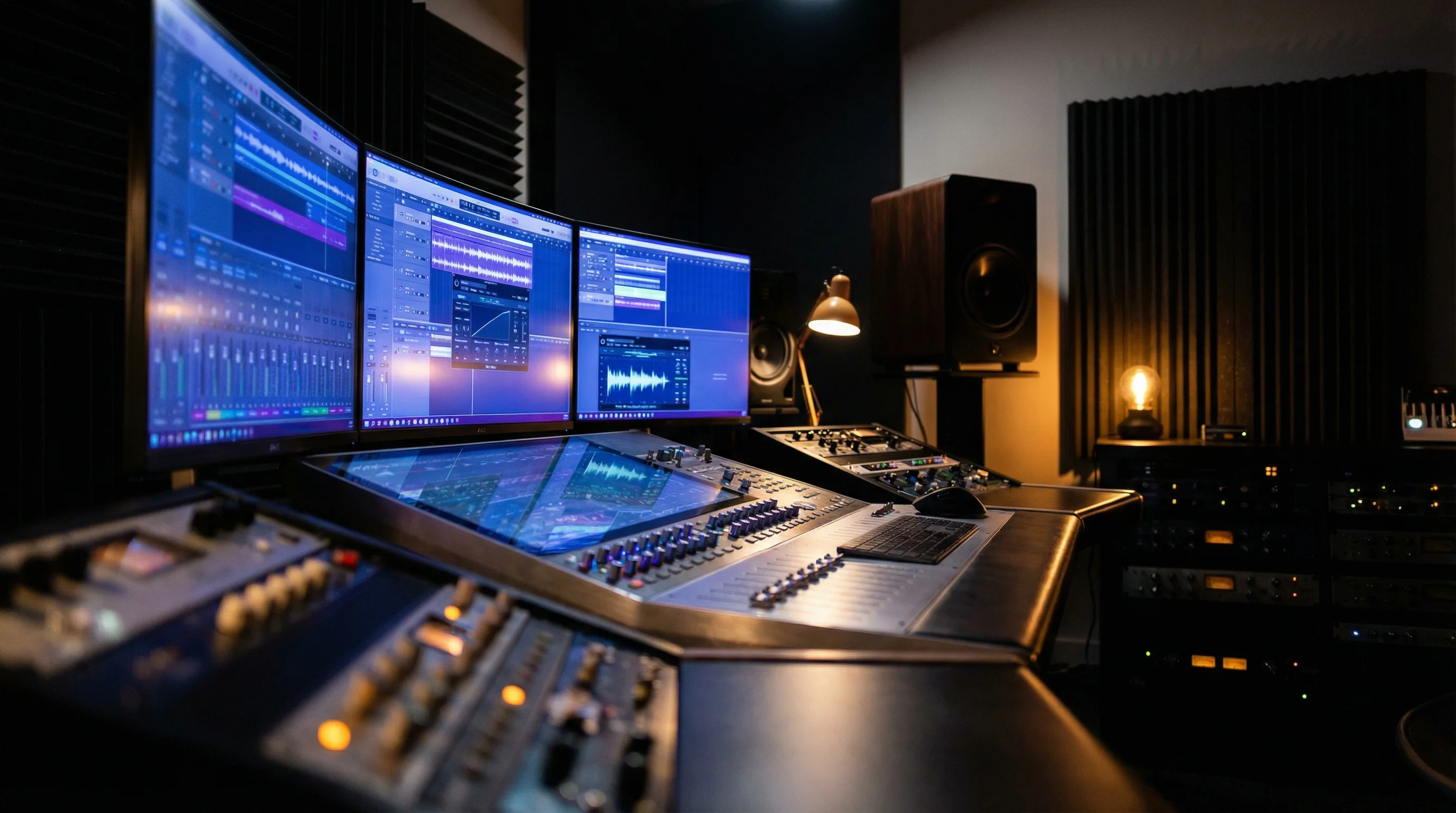
No AI lyric swap tools deliver perfect results straight out of the box. Professional output requires DAW editing to polish inconsistencies and blend sections seamlessly.
My Ableton template includes separate tracks for:
I frequently use Udio for inpainting specific problem sections. When Suno or ChangeLyric produces artifacts in certain phrases, Udio's inpainting feature can fix isolated problems without regenerating entire sections.
Sometimes replacing unchanged sections improves overall consistency. If AI-generated vocals don't perfectly match the original, extending the replacement to cover entire verses or choruses creates internal vocal cohesion that sounds more natural than switching between AI and original vocals mid-section.
"The core principle is using AI lyric swap tools to match the original mixing characteristics rather than fighting against them. Sometimes bigger replacements sound better than precise surgical changes."
For lead and backing vocal separation, LALAL.AI consistently outperforms Ultimate Vocal Remover's models in my testing. This separation capability is crucial when you need to modify only backing vocals or isolate harmonies for individual treatment - functionality that ChangeLyric's harmonizer tools leverage for precise vocal control.
After processing hundreds of professional orders, I've identified clear strengths and limitations across major AI lyric swap tools:
Strengths:
Limitations:
According to comparative analysis, Suno excels at generating complete songs from lyrics in under 60 seconds, with "spookily human" vocal quality that supports effective voice cloning.
Strengths:
Limitations:
Open-source voice cloning tools like RVC excel in singing/performance audio with low latency and high timbre accuracy, making them popular in music communities for speech-to-speech and singing transfers.
Strengths:
Limitations:
For professional lyric swapping in 2026, I recommend a hybrid approach:
The reality of AI lyric swap tools in 2026 is that professional results require combining multiple platforms and maintaining strong DAW skills. While fully automated solutions don't exist yet, the current toolkit delivers broadcast-quality results when properly orchestrated. ChangeLyric represents the most comprehensive solution for professional producers who need unrestricted creative control.
For producers serious about lyric modification, investing time in mastering this multi-tool workflow pays dividends in both quality and creative freedom. The landscape continues evolving rapidly, but these foundational techniques remain essential for professional-grade output. Ready to experience professional-grade lyric swapping without content restrictions? Visit ChangeLyric.com to access the complete toolkit discussed in this article and transform your creative workflow with unlimited control over your lyric modifications.